↜
rogerdoes.science
Past and Present Ecospheres & Winogradsky Columns
I find great satisfaction in the care and keeping of ecosphere jars and Winogradsky columns - which, accordingly, require a minimal amount of care and keeping by design.
While I don't particularly find a lot of success in keeping plants (they tend to die, so I am often hesitant to procure new ones lest I accidentally end their lives). In contrast, it is rather impossible to destroy life in these little self-contained "ecosystems". I of course take care to not include macroinvertabrates besides snails in my various tanks and jars, though, but zooplankton and snails are abound in most of them!
This page will grow to include details about my sealed and unsealed ecosphere jars, my open algae tanks, my Winogradsky columns, and any terrariums and plants. I am always eager to innoculate new jars with water and dirt samples from new locations.
Winogradsky Columns
Winogradsky columns contain a mix of mud and water and are meant to offer a cut-away view of microbial community development that we normally don't get to see.
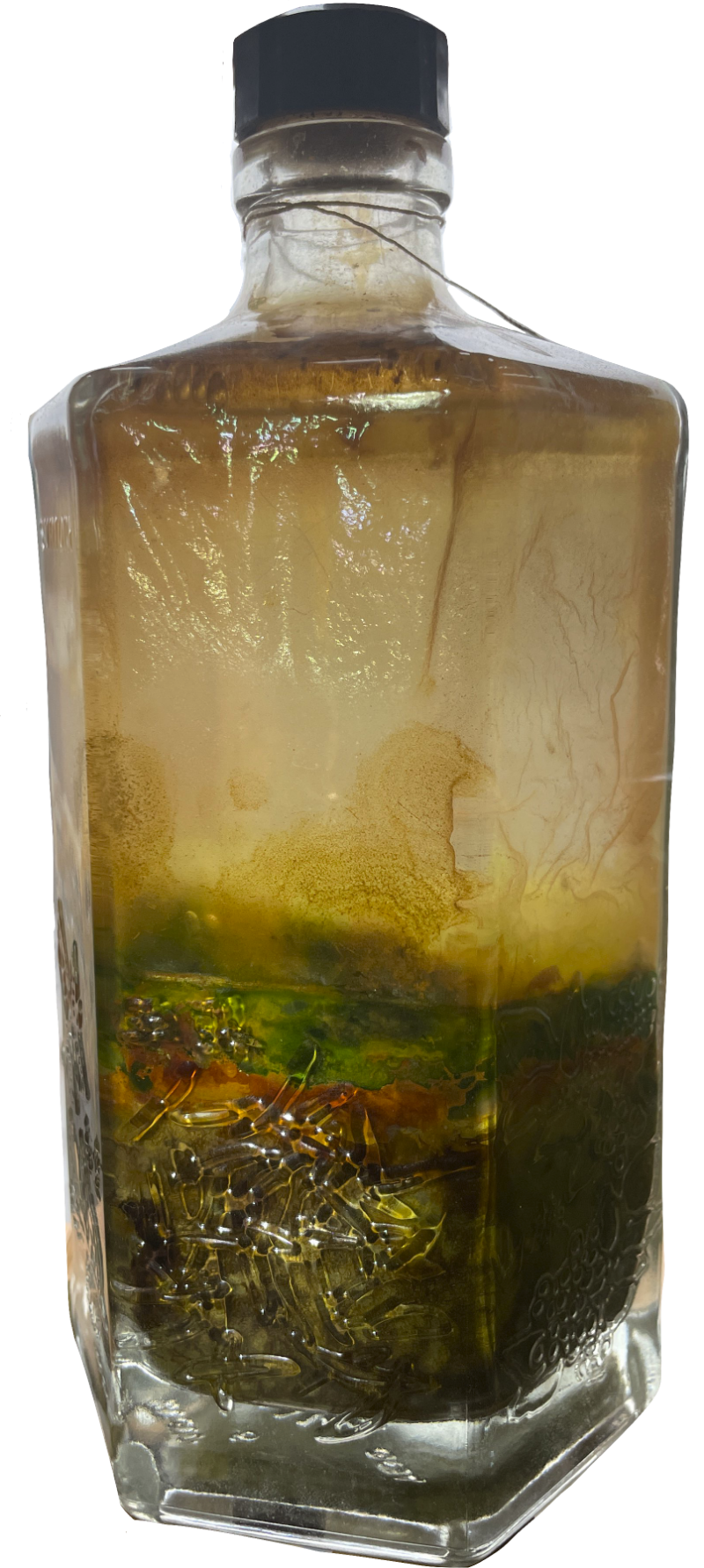
📍 Hawley Brook, CT
📅 August 2021
This Winogradsky column is my oldest and my personal favorite. I collected the sediment and water from a (beloved, by me at least) acid rock drainage contaminated effluence near Hawley Brook, CT, where the iron-heavy sediment is a rich orange color.
To this day it is still actively changing in apperance, which I find fascinating to watch. I particularly enjoy watching the development of the iridescent thin film coating the bottle sides, which looks like holographic cellophane.
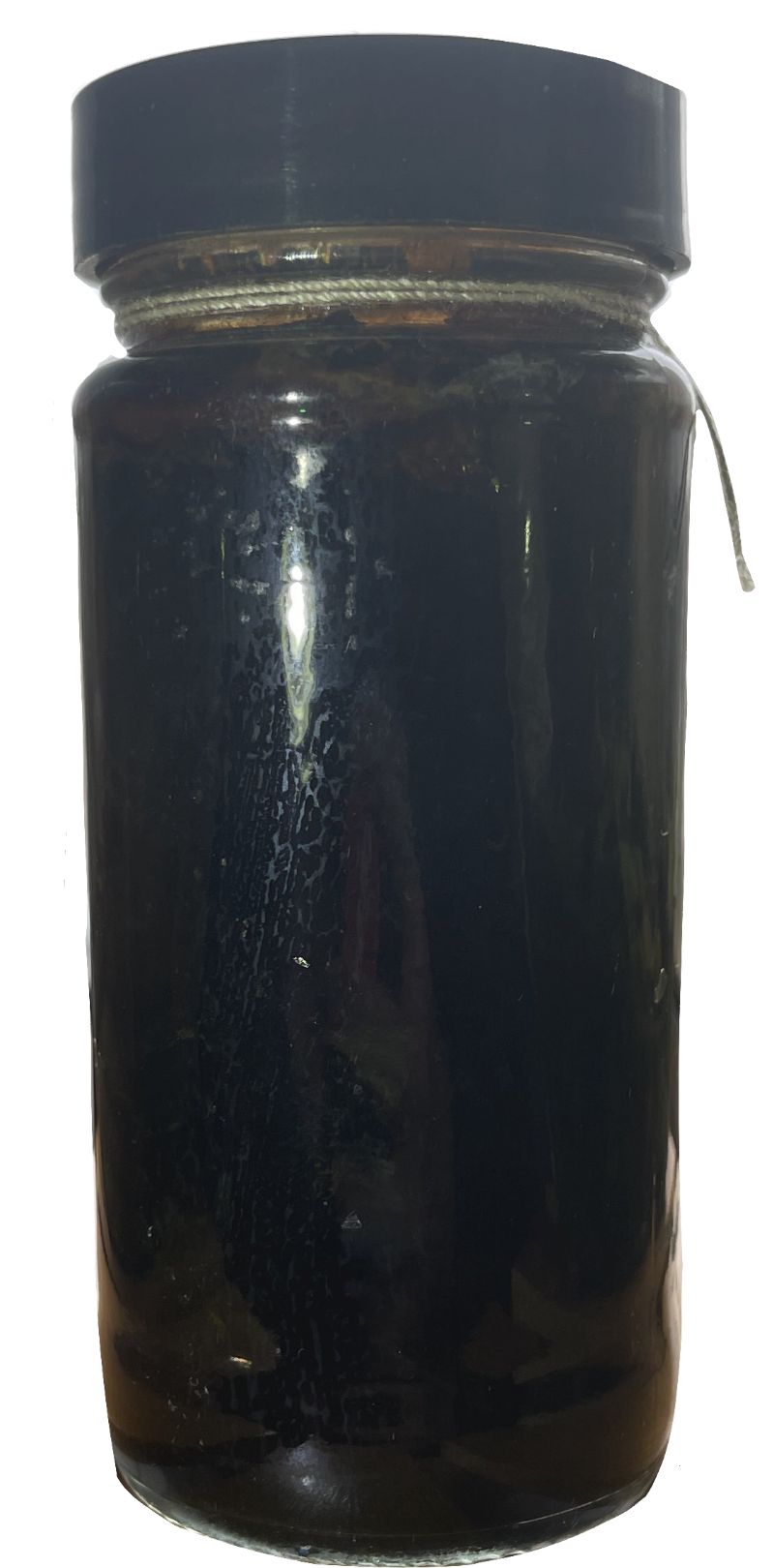
📍 Beaver Run Borehole, PA
📅 June 2022
A circumneutral mine drainage effluence bubbling up from a flooded mine vent, featuring an interesting microbiome. The borehole is encrusted with black, green, white, purple, and orange masses, and white "sulfur streamers" float in the effluence downstream.
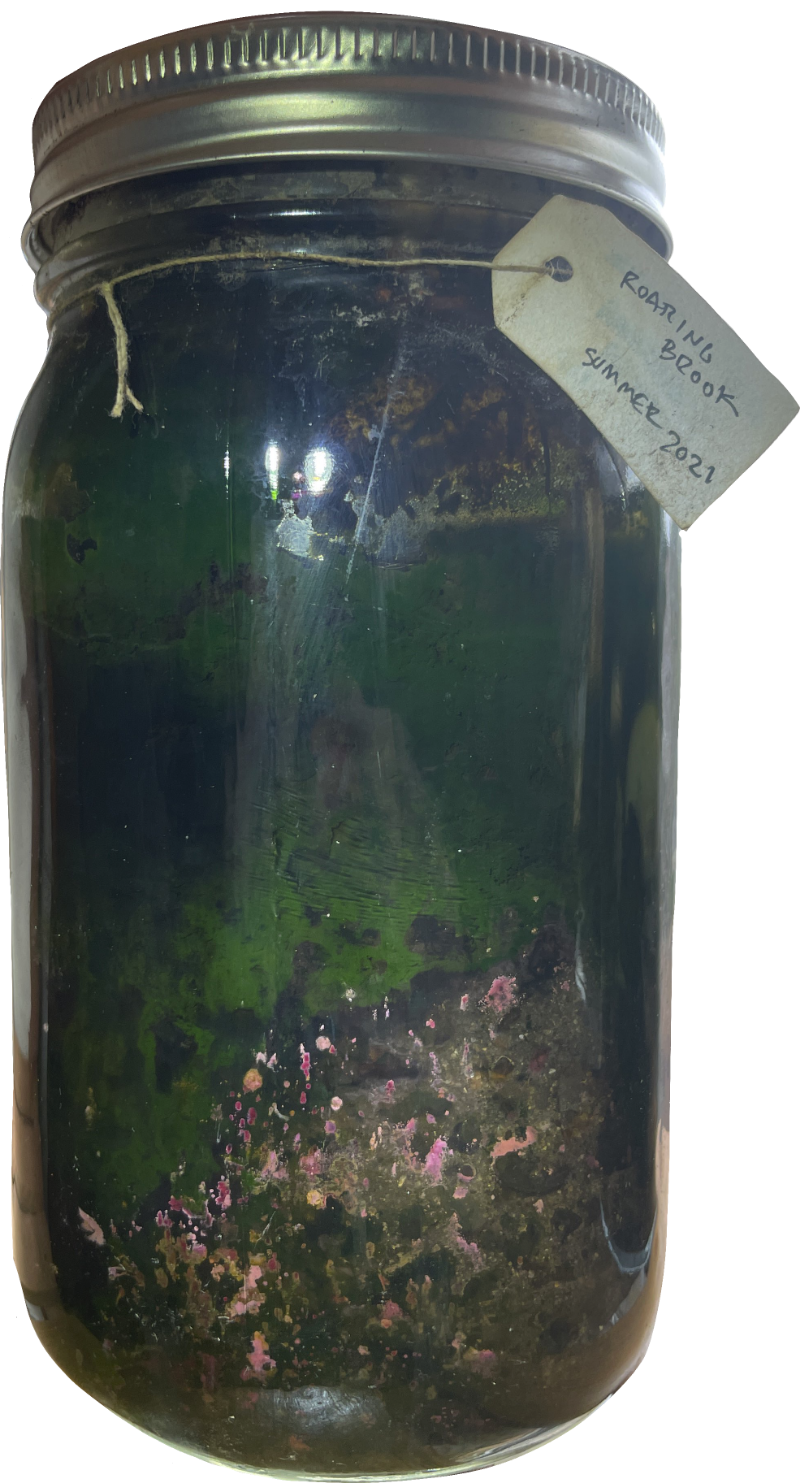
📍 Roaring Brook, CT
📅 August 2021
Made with mud from my childhood brook. Very smelly, likely due to having a high amount of rotting organic matter (mud). Hard to see due to the dark coloration, but filled with purple and green sulfur bacteria.
Ecosphere Jars
Sealed ecospheres that aren't managed, maintained, or interfered with after their creation date.
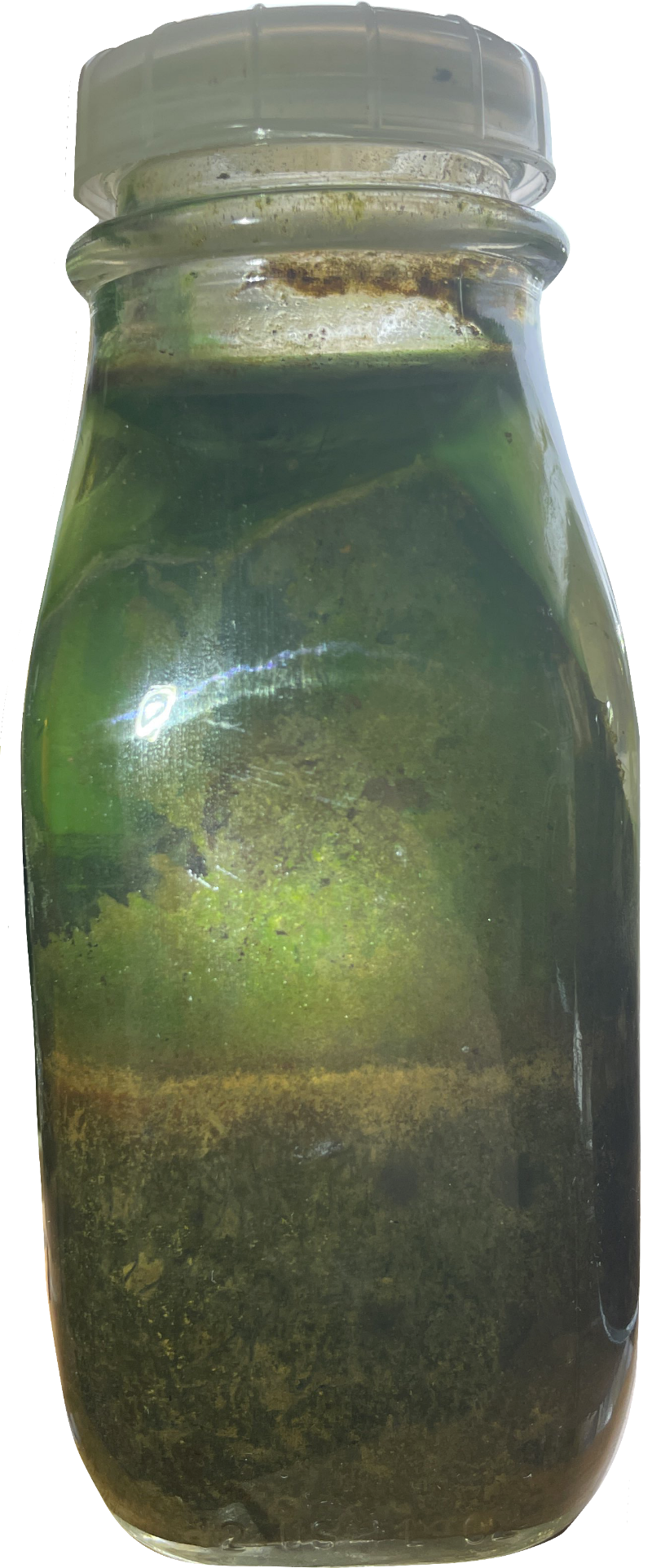
📍 Roaring Brook, CT
📅 August 2022
A repeat of my previous Wino column using more live plant matter, sand, and water. This one has much more algae which has coated the inside surface in a dense mat.
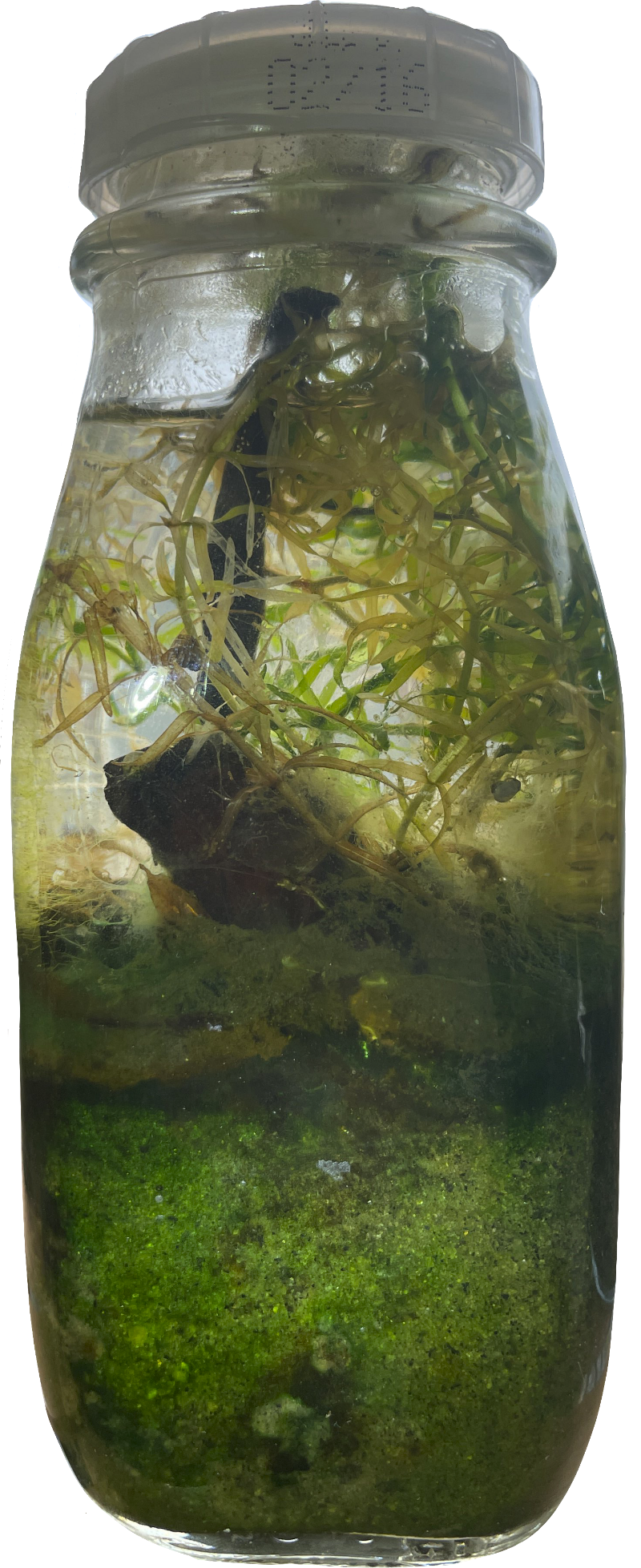
📍 Farmington River, CT
📅 August 2022
Contains live plant matter and river rocks from the Farmington River, another favorite childhood spot of mine. Less algae due to the presence of what I think is a (probably invasive, unfortunately) water milfoil plant.
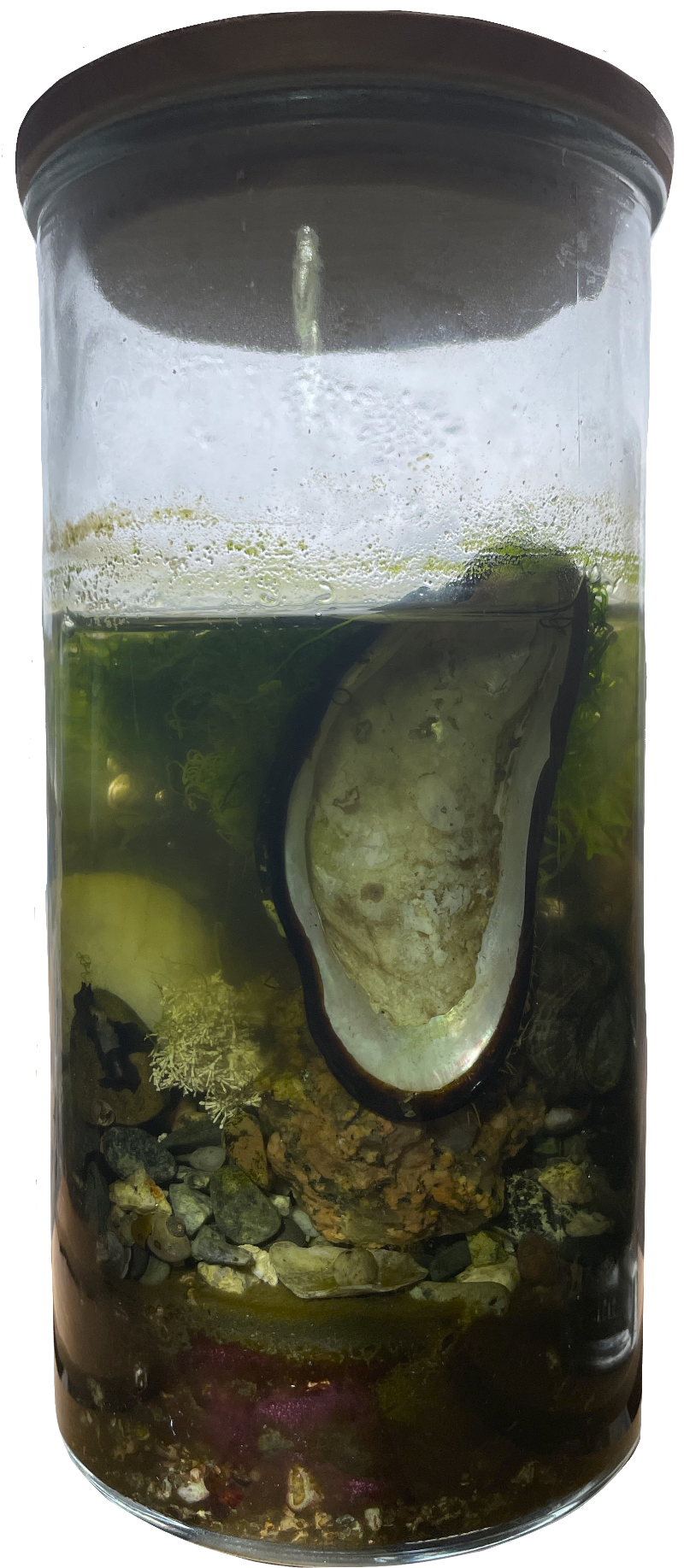
📍 Great Wass Island, ME
📅 August 2022
A salt-water column containing beach rock, shells, and purple sulfur bacteria innocula from a hike on Great Wass Island. Was seemingly barren for months until it all of a sudden filled up with beautiful curly leafy-looking "seaweed"! Has a lot of purple sulfur bacteria.
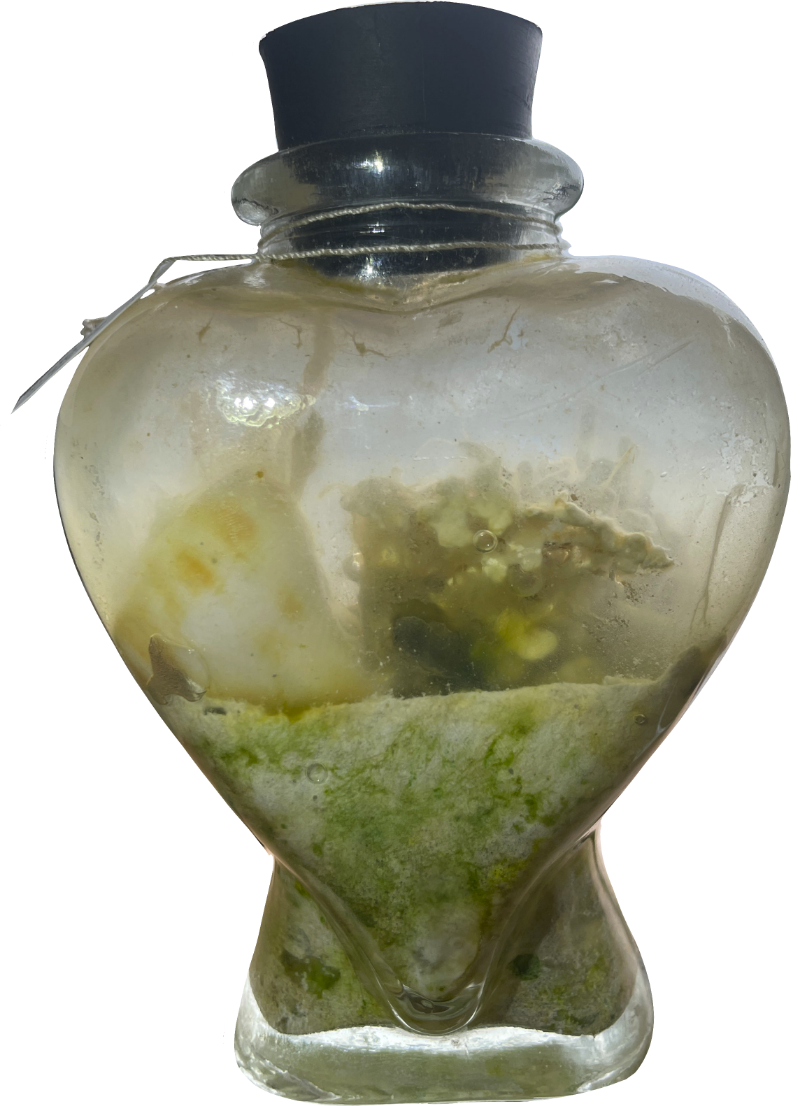
📍 Sugarloaf Key, FL
March 2022
Constructed from sand, silt,and washed-up dead coral fragments from beachcombing. Saltwater, but lacks purple sulfur bacteria. Very uneventful.
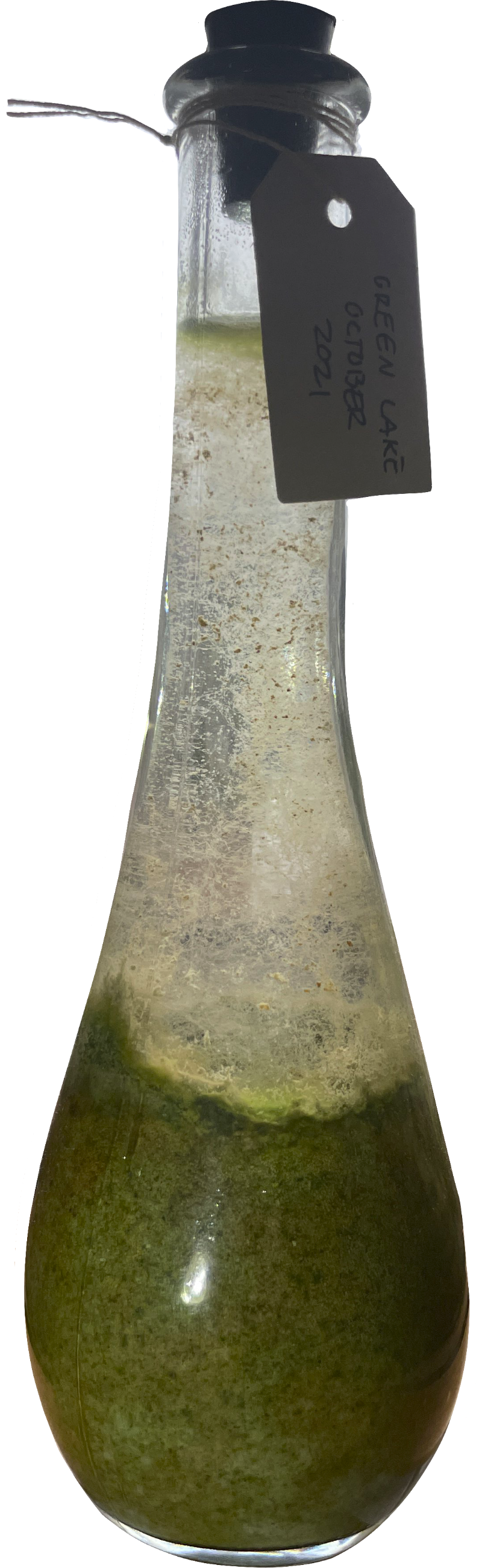
📍 Green Lake, NY
📅 October 2021
Silt and water from Green Lake, NY, famous for its thrombolite formations. Contains some algae and iron bacteria, but also has an interesting biofilm-like matrix of some kind of substance distributed throughout the neck of the bottle.
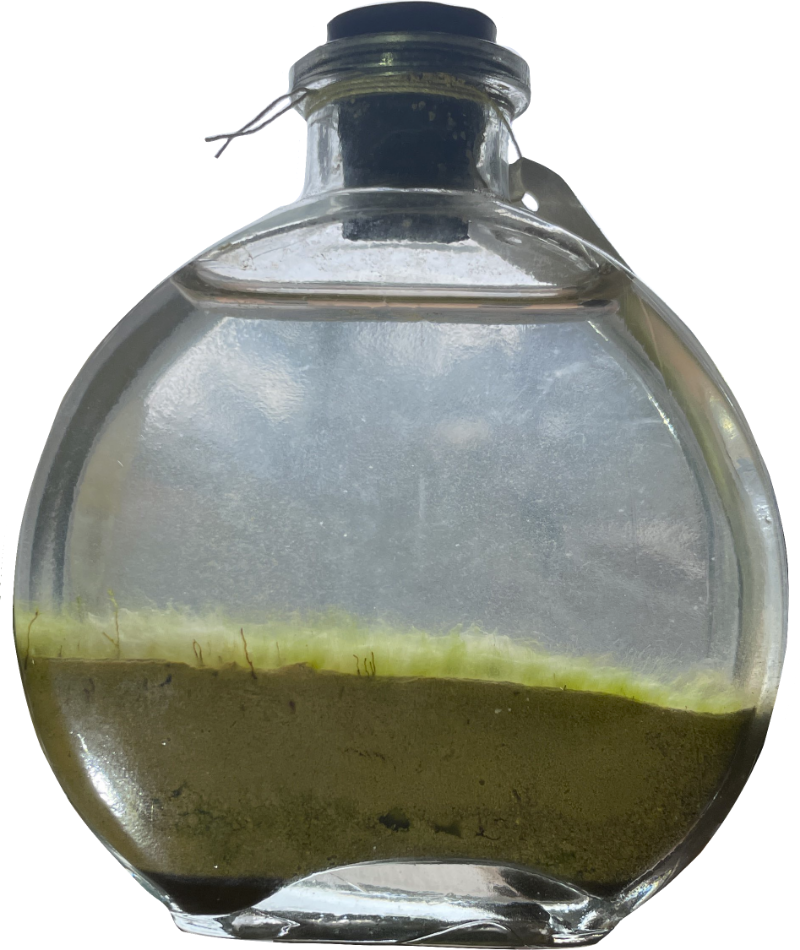
📍 Ore Pond, PA
📅 October 2021
Sediment and water from an abandoned flooded mining pit in Pennsylvania, also a very uneventful column with a simple green lawn of filamentous-looking photosynthetic growths.
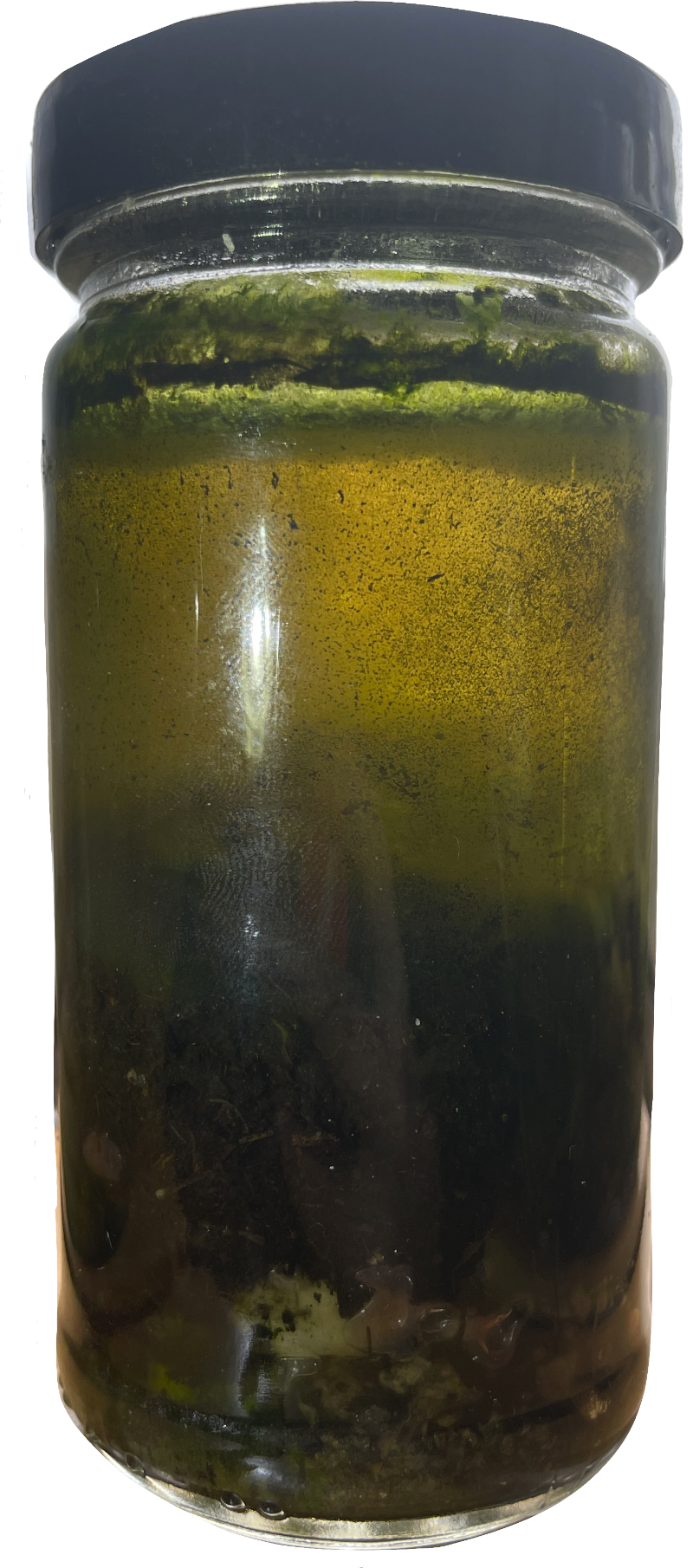
📍 Appledore Island, ME
📅 August 2022
Sediment and water from Appledore Island, near Central Pond.
Terrariums
Sealed and unsealed terrariums where I keep non-aquatic plants and/or mosses.
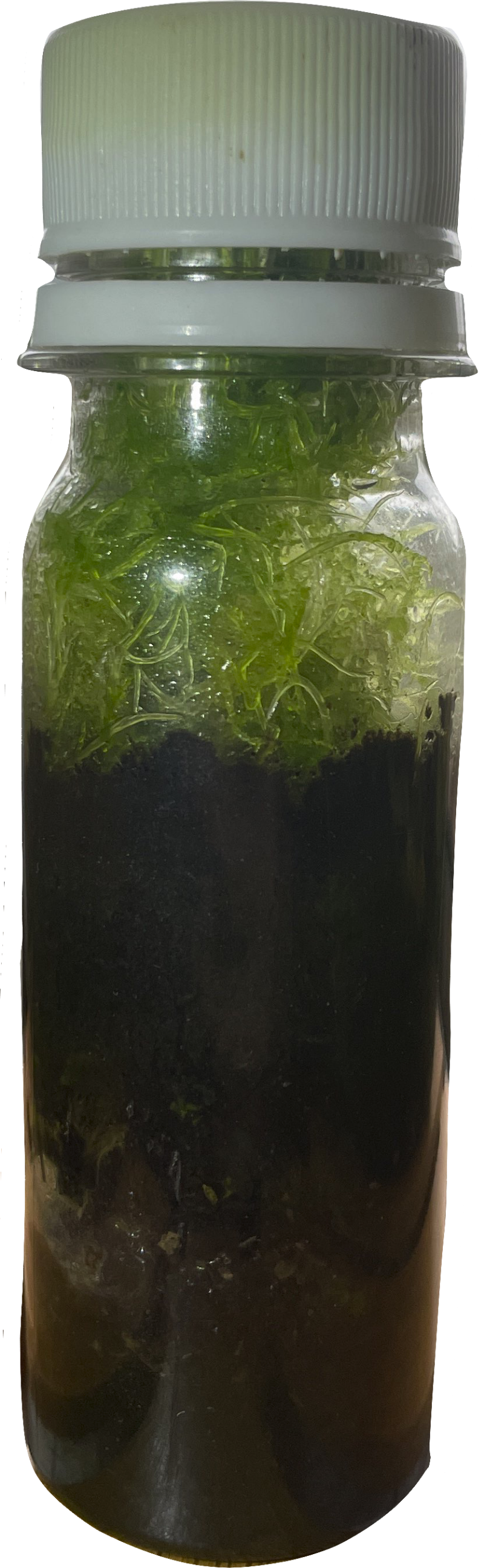
📍 Cutler Coast, ME
📅 August 2022
Mud and some sphagnum moss from near Cutler coast in Maine. I constructed this little jar thinking that the moss would quickly die, but months later it appears to still be going strong.
Aquatic Tanks
These are my open-air aquatic tanks which contain biota from various sources.
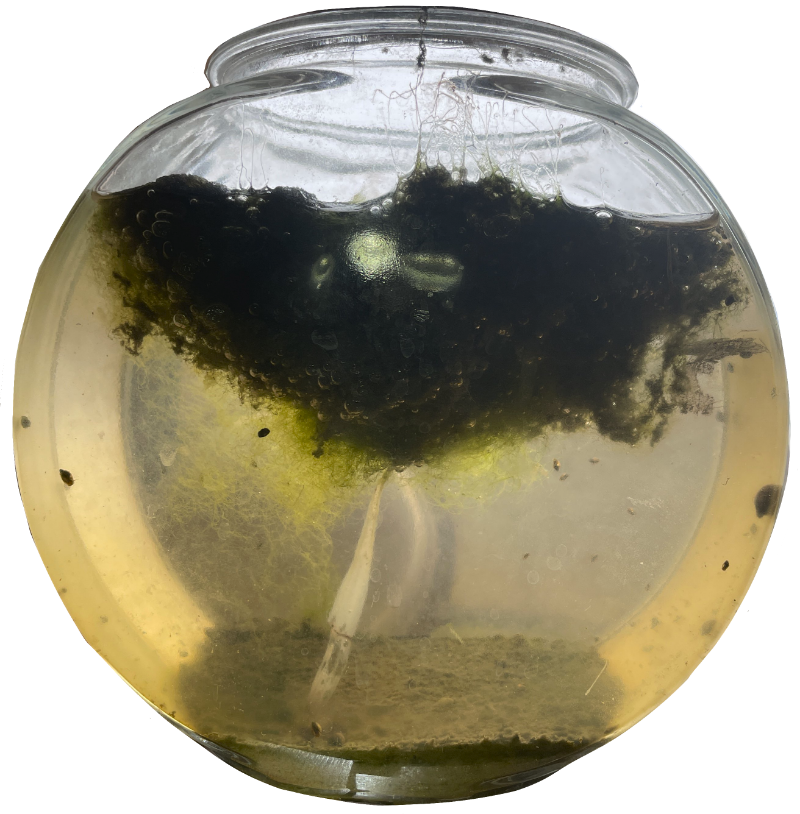
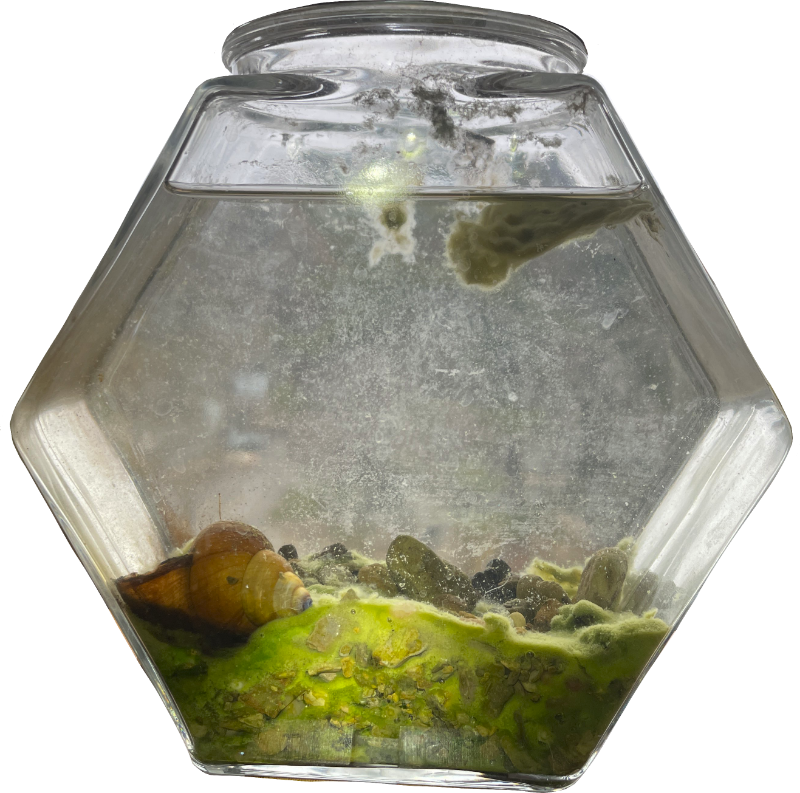
The Snail Tank
Has the most snails, requiring water changes.
The Rocky Tank
Contains few snails and little algae. Has a rocky substrate and some zooplankton (namely daphnia).
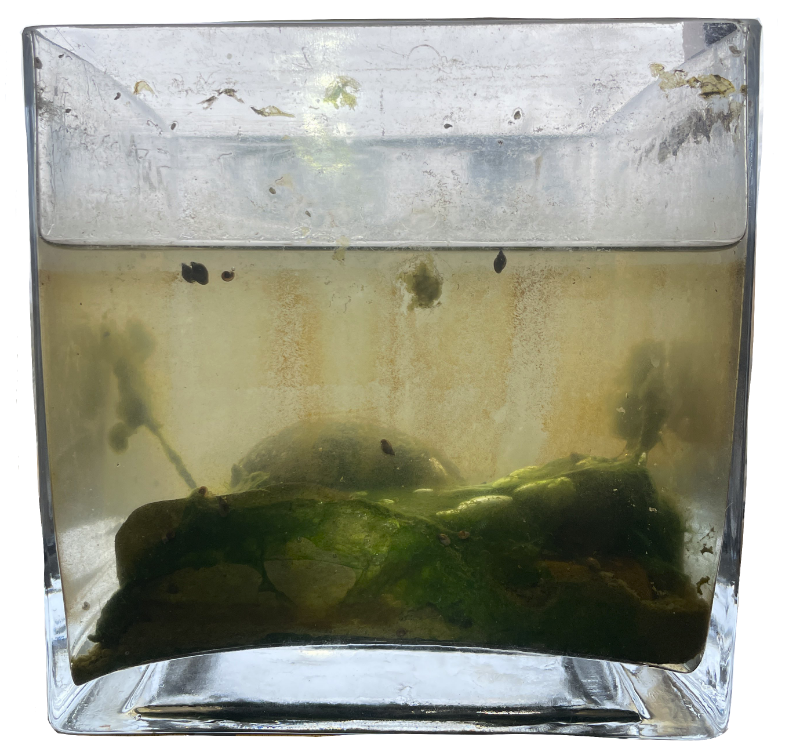
The Big One
My largest tank, containing material from a nearpy Pennsylvania stream as well as the Penn State alumni pond.
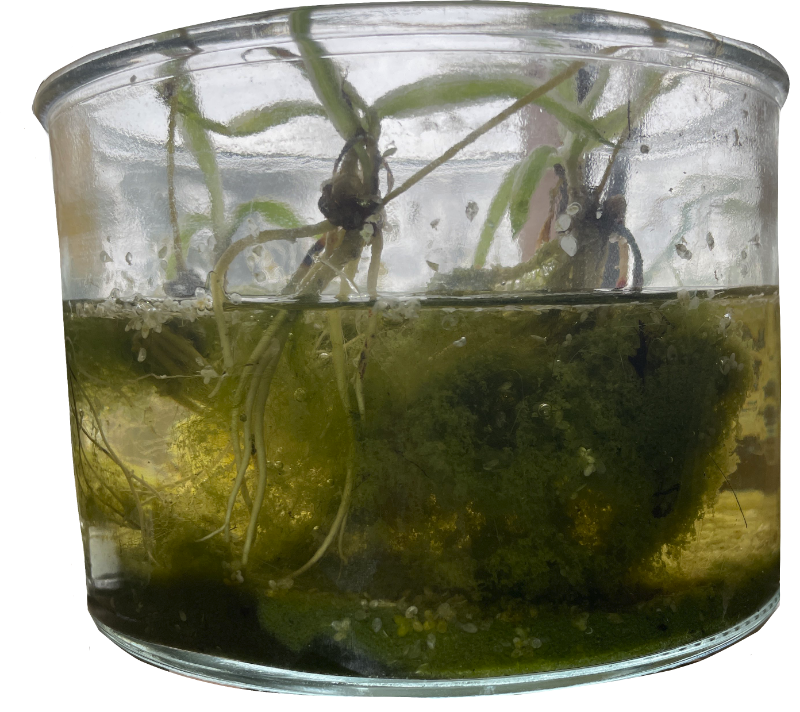
The Duckweed Tank
A shallow circular tank that I use to grow duckweed, algae, and provide a consistant source of water for my spider plant.